
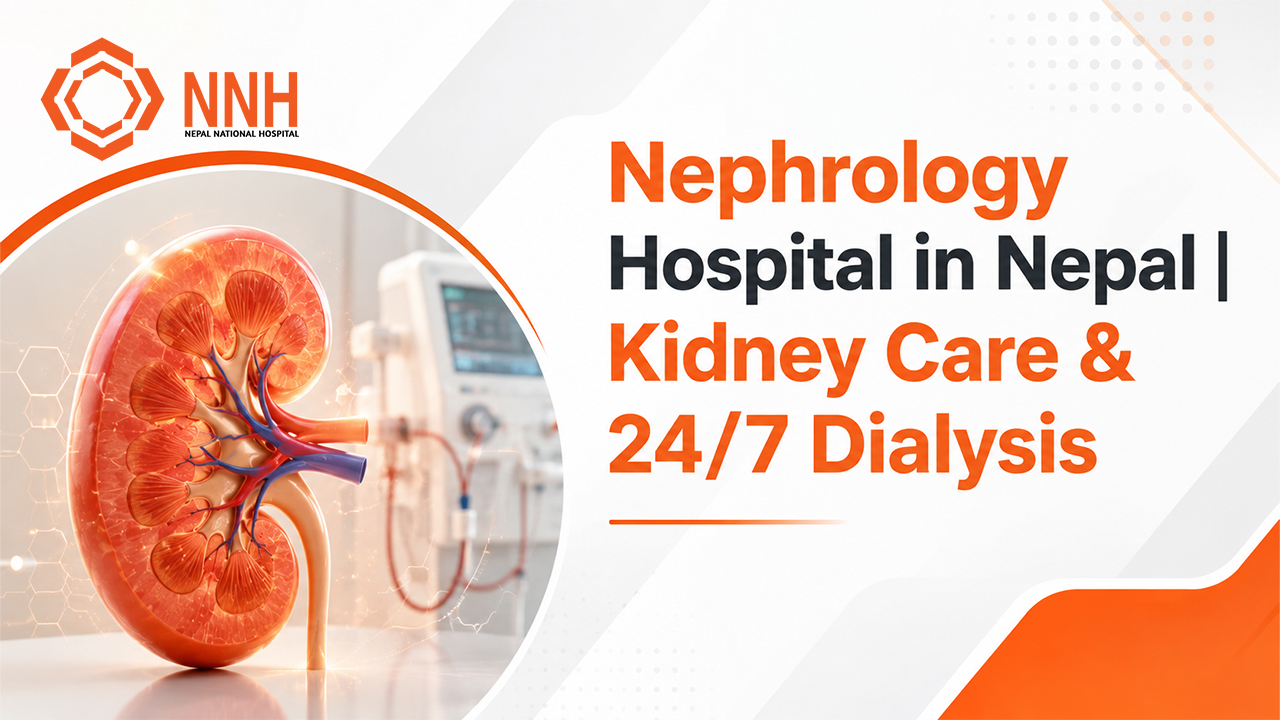
Kidney disease is often silent in the early stage, but early diagnosis and timely treatment can protect long-term health. A trusted nephrology hospital in Nepal helps patients detect kidney problems, manage chronic kidney disease, control diabetes and blood pressure-related kidney damage, and receive dialysis support when needed.
Nepal National Hospital provides kidney related care through nephrology consultation, diagnostic support, emergency care, dietetic guidance, and 24/7 dialysis in Kathmandu. For patients with high creatinine, swelling, frothy urine, reduced urine output, diabetes, hypertension, or known kidney disease, consulting a nephrologist at the right time can make a major difference.
What Is Nephrology in a Hospital?
Nephrology is the medical specialty focused on the diagnosis, treatment, and long-term management of kidney diseases. In a hospital, nephrology care usually includes kidney function evaluation, treatment of chronic kidney disease, management of electrolyte imbalance, dialysis planning, and care for patients with diabetes or high blood pressure-related kidney problems.
A nephrologist is a kidney specialist who evaluates how well the kidneys are filtering waste, balancing fluids, controlling blood pressure, and maintaining important minerals in the body. When the kidneys become weak or damaged, a nephrologist helps patients slow disease progression and avoid serious complications.
When Should You Visit a Nephrologist in Kathmandu?
Many people visit a kidney doctor only after their creatinine level becomes high or dialysis is advised. However, kidney disease can begin much earlier. A timely visit to a nephrologist in Kathmandu is recommended if you have:
- Swelling in feet, ankles, hands, or face
- Frothy or foamy urine
- Blood in urine
- Reduced urine output
- High creatinine or urea level
- Long-term diabetes
- High blood pressure
- Repeated urinary infections
- Family history of kidney disease
- Unexplained fatigue, nausea, or loss of appetite
- Known chronic kidney disease
- Need for dialysis or dialysis planning
Patients with diabetes and hypertension should be more careful because these two conditions are among the most common causes of chronic kidney disease. Regular kidney function testing can help detect damage before symptoms become severe.
Why Kidney Disease Needs Early Diagnosis
The kidneys filter waste, extra fluid, and toxins from the blood. They also help control blood pressure, support red blood cell production, and maintain mineral balance. When kidney function declines, waste starts building up in the body.
The challenge is that early kidney disease may not show clear symptoms. Many patients feel normal until kidney function has already reduced significantly. That is why kidney function tests are important, especially for people with diabetes, hypertension, heart disease, obesity, older age, or a family history of kidney disease.
Common kidney tests include:
- Serum creatinine
- eGFR
- Urea
- Urine routine examination
- Urine albumin or microalbumin test
- Electrolytes
- Ultrasound of kidneys when required
A nephrology hospital in Nepal should not only treat advanced kidney disease but also help patients detect risk early and manage it properly.
Kidney Hospital in Nepal: What Services Should Patients Expect?
A reliable kidney hospital in Nepal should provide more than consultation. Kidney disease often needs combined care from doctors, nurses, lab teams, dialysis technicians, dietitians, and emergency support.
Important kidney care services include:
1. Nephrologist Consultation
A nephrologist evaluates symptoms, medical history, blood pressure, diabetes status, kidney function reports, urine findings, and medication history. Based on the condition, the doctor may recommend further tests, lifestyle changes, medicines, dialysis planning, or referral for transplant evaluation when needed.
2. Kidney Function Testing
Regular testing helps detect kidney problems before they become serious. Creatinine, eGFR, urea, urine albumin, and electrolyte levels help doctors understand the stage and severity of kidney disease.
3. Chronic Kidney Disease Management
Chronic kidney disease, also called CKD, requires long-term care. The goal is to slow kidney damage, manage blood pressure, control diabetes, reduce urine protein, prevent complications, and prepare for dialysis or transplant when necessary.
4. Dialysis Support
Dialysis is needed when the kidneys can no longer remove waste and extra fluid properly. Having access to 24/7 dialysis in Kathmandu is especially important for patients with emergency kidney failure, high potassium, fluid overload, poisoning cases, or advanced CKD.
5. Emergency Kidney Care
Sudden kidney failure, severe dehydration, uncontrolled blood pressure, low urine output, electrolyte imbalance, and dialysis emergencies require immediate hospital care. A hospital with emergency and dialysis support can help patients receive timely treatment.
6. Diet and Lifestyle Counseling
Kidney patients often need changes in salt, fluid, protein, potassium, and phosphorus intake. Diet advice should be personalized because food restrictions depend on the patient’s kidney stage, blood reports, diabetes status, and whether the patient is on dialysis.
Nephrology Care at Nepal National Hospital
Nepal National Hospital offers patient-focused kidney care in Kathmandu with nephrology-related services, diagnostic support, emergency care, and 24/7 dialysis availability. The hospital’s kidney care approach is helpful for patients who need evaluation for kidney symptoms, chronic kidney disease management, diabetic kidney care, hypertension-related kidney problems, and dialysis support.
For many patients, convenience matters. A hospital with emergency services, pharmacy, lab support, ICU backup, dialysis, and specialist consultation under one roof can make treatment easier and safer, especially for patients with complex health conditions.
Why 24/7 Dialysis in Kathmandu Matters
Dialysis is not always a routine scheduled service. Some patients need urgent dialysis because of sudden kidney failure, very high potassium, excess fluid in the lungs, severe acidosis, poisoning, or complications of chronic kidney disease.
Round-the-clock dialysis support helps kidney patients receive care at the right time. For patients living in Kathmandu and nearby areas, access to 24/7 dialysis in Kathmandu can be lifesaving during emergencies.
Patients already on dialysis also need continuous monitoring, proper vascular access care, infection prevention, blood pressure management, diet guidance, and regular follow-up with a nephrologist.
Common Kidney Problems Treated by a Nephrologist
A nephrologist may help manage:
- Chronic kidney disease
- Acute kidney injury
- Diabetic kidney disease
- Hypertension-related kidney disease
- Protein in urine
- Blood in urine related to kidney causes
- Electrolyte imbalance
- Kidney failure
- Dialysis-related complications
- Swelling due to kidney disease
- Kidney disease with heart or diabetes complications
Some kidney-related conditions may also need coordination with urologists, endocrinologists, cardiologists, critical care doctors, or transplant centers depending on the patient’s condition.
Diabetes, High Blood Pressure and Kidney Disease
Diabetes and high blood pressure are two major reasons people develop kidney problems. High blood sugar can damage the small filtering units of the kidneys over time. High blood pressure can also damage kidney blood vessels and make kidney function worse.
Patients with diabetes or hypertension should not wait for symptoms. Regular kidney screening is important. Tests such as creatinine, eGFR, urine albumin, and blood pressure monitoring can help detect early kidney damage.
Early treatment may include blood sugar control, blood pressure control, kidney-protective medicines, salt reduction, weight management, and regular nephrology follow-up.
What Are the Warning Signs of Kidney Disease?
Kidney disease may be silent, but some warning signs should not be ignored:
- Swelling in feet or face
- Frothy urine
- Reduced urine amount
- Tiredness and weakness
- Nausea or vomiting
- Loss of appetite
- Itching
- Shortness of breath
- Uncontrolled blood pressure
- High creatinine in blood test
- Frequent nighttime urination
- Blood in urine
These symptoms do not always mean kidney failure, but they should be evaluated by a doctor.
What Are 5 Foods to Avoid for Kidney Disease?
Kidney diet should always be personalized, but many kidney patients are advised to limit certain foods depending on their blood reports and disease stage.
Five common food groups to avoid or limit in kidney disease include:
- High-salt processed foods such as chips, instant noodles, pickles, packaged snacks, and processed meat
- Dark-colored soft drinks and packaged drinks with phosphorus additives
- Very high-potassium foods such as banana, orange, potato, tomato, and avocado when potassium is high
- Excess dairy, nuts, seeds, and high-phosphorus foods when phosphorus is high
- Excess protein intake, especially without dietitian or doctor guidance
Dialysis patients may need a different diet than non-dialysis kidney patients. Always follow the diet plan given by your nephrologist or renal dietitian.
Is Nepal Good for Kidney Transplants?
Nepal has developed kidney transplant services through government and selected private hospitals. Patients with end-stage kidney disease may be evaluated for transplant if they are medically fit and have a suitable donor or transplant option.
However, not every kidney hospital performs transplant surgery. Some hospitals provide nephrology care, dialysis, diagnosis, and referral support, while licensed transplant centers perform transplant procedures. Patients should consult a nephrologist to understand whether dialysis, transplant evaluation, or continued medical management is the right option.
What Is the Cost of a Kidney Transplant in Nepal?
The cost of kidney transplant in Nepal can vary depending on the hospital, donor evaluation, lab tests, surgery, medicines, ICU stay, complications, and follow-up care. Some government-supported transplant services may reduce the cost for eligible Nepali patients, while private hospitals may have different pricing.
Patients should directly contact the transplant center for the latest cost estimate because transplant cost can change based on individual medical needs and government policy.
Which Is the Best Hospital for Kidney Transplant in Nepal?
The best hospital for kidney transplant depends on the patient’s medical condition, donor availability, transplant license, surgical team, nephrology team, ICU support, infection control, cost, follow-up system, and transplant outcomes.
For transplant-related decisions, patients should choose a licensed transplant center with an experienced multidisciplinary team. Nepal National Hospital can support kidney patients with nephrology consultation, kidney disease evaluation, dialysis care, and guidance for further transplant evaluation when needed.
Can I Live 50 Years After a Kidney Transplant?
Some people live for many years after a kidney transplant, but 50 years is not something that can be promised. The life of a transplanted kidney depends on donor type, patient age, immune matching, infection risk, medicine adherence, blood pressure, diabetes control, and regular follow-up.
Many patients may need long-term medicines and continuous monitoring after transplant. Some may also need another transplant later in life if the transplanted kidney stops working.
Can You Live 30 Years on Dialysis?
Yes, some patients can live 20 to 30 years on dialysis, but it depends on age, heart health, diabetes, blood pressure, nutrition, dialysis quality, infection prevention, and how well the patient follows the care plan.
Dialysis is a long-term commitment. Regular sessions, fluid control, diet management, vascular access care, and nephrologist follow-up are essential for better outcomes.
How to Choose a Nephrology Hospital in Nepal
When choosing a nephrology hospital in Nepal, patients should look for:
- Availability of nephrologist consultation
- Kidney function testing facilities
- 24/7 dialysis support
- Emergency care
- ICU backup
- Experienced dialysis technicians and nursing team
- Dietetic service
- Pharmacy support
- Clear patient counseling
- Follow-up care for CKD, diabetes, and hypertension
Kidney care is not only about one treatment. It requires monitoring, education, emergency support, and long-term planning.
Why Choose Nepal National Hospital for Kidney Care?
Nepal National Hospital is a suitable choice for patients looking for kidney care, nephrology consultation, and 24/7 dialysis in Kathmandu. The hospital provides integrated healthcare support for patients with chronic diseases, emergency needs, and kidney-related complications.
Patients with diabetes, high blood pressure, swelling, high creatinine, reduced urine, or existing kidney disease can visit the hospital for evaluation and further treatment planning.
Final Message
Kidney disease can progress silently, but early testing and timely nephrology care can help protect your health. Whether you need a nephrologist in Kathmandu, kidney function testing, chronic kidney disease management, or 24/7 dialysis in Kathmandu, Nepal National Hospital provides accessible kidney care support for patients and families.
For kidney symptoms, high creatinine, diabetes-related kidney risk, hypertension, or dialysis needs, book a consultation with the nephrology team at Nepal National Hospital.
Frequently Asked Questions
Is Nepal good for kidney transplants?
Yes, Nepal has kidney transplant services through government and selected private hospitals. Patients should consult a nephrologist and choose a licensed transplant center for proper evaluation.
What is nephrology in a hospital?
Nephrology is the hospital specialty that diagnoses and treats kidney diseases, kidney failure, electrolyte problems, high blood pressure-related kidney damage, and dialysis-related needs.
What are 5 foods to avoid for kidney disease?
Kidney patients may need to limit high-salt processed foods, dark soft drinks, high-potassium foods, high-phosphorus foods, and excess protein. The exact diet depends on kidney stage and blood reports.
What is the cost of a kidney transplant in Nepal?
Kidney transplant cost in Nepal varies by hospital, tests, surgery, medicines, ICU stay, and follow-up. Some eligible patients may receive government-supported services in selected centers. Patients should confirm the latest cost directly with the transplant hospital.
Can I live 50 years after a kidney transplant?
It may be possible for some patients to live many years after transplant, but 50 years cannot be guaranteed. Long-term outcome depends on donor type, health condition, medicine adherence, and regular follow-up.
Which is the best hospital for kidney transplant in Nepal?
The best hospital depends on transplant license, experienced team, ICU support, donor evaluation, infection control, cost, and follow-up care. A nephrologist can guide patients to a suitable licensed transplant center.
Can you live 30 years on dialysis?
Yes, some patients live 20 to 30 years on dialysis, but average survival varies. Good dialysis quality, diet control, heart health, infection prevention, and regular follow-up are important.
Author Bio
Prepared for Nepal National Hospital’s patient education platform. This article is intended for general awareness and should be medically reviewed by the NNH Nephrology Department before publication. Patients should consult a qualified doctor or nephrologist for diagnosis and treatment decisions.
