
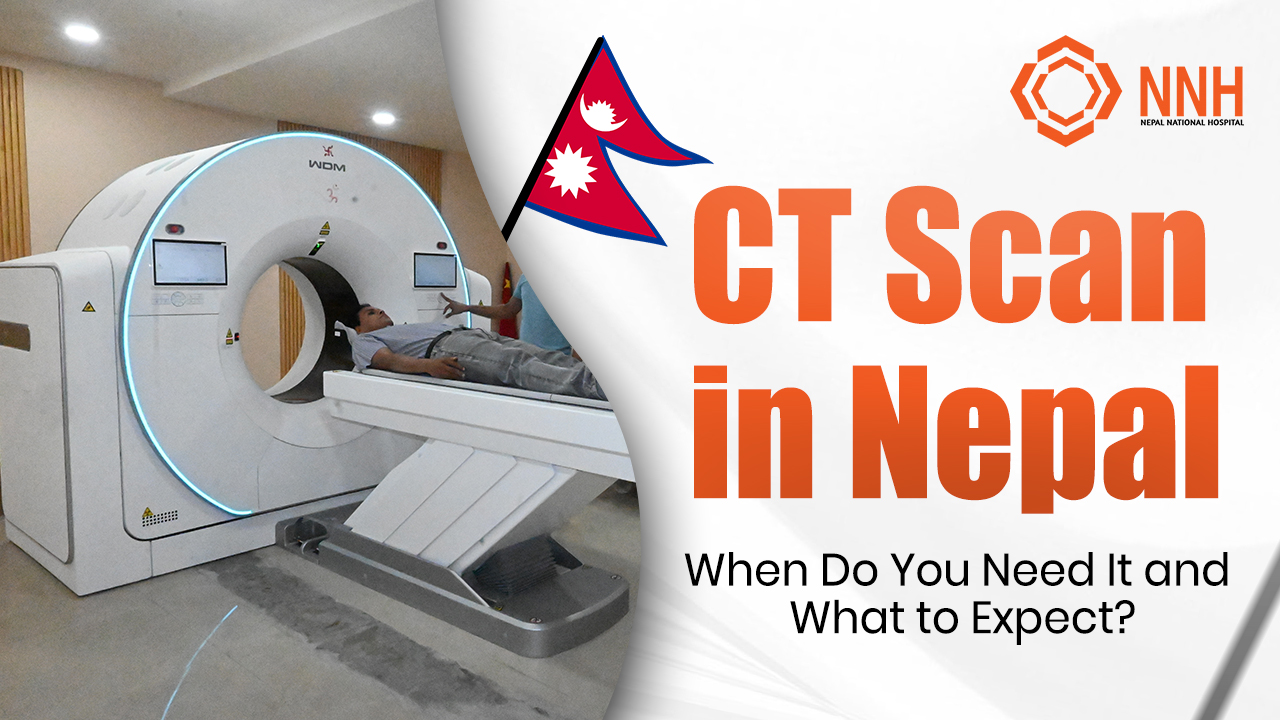
Medical imaging plays a crucial role in modern diagnosis. Among the most widely used technologies is the CT scan an advanced imaging method that helps doctors detect injuries, infections, tumors, internal bleeding, and many other conditions with precision.
If you are considering a CT scan in Nepal, it is natural to have questions:
When is it necessary? Is it safe? How should you prepare? What does the procedure involve?
This guide serves one clear informational purpose:
to explain when a CT scan is recommended, how it works, and what patients should realistically expect based on current medical standards and evidence.
What Is a CT Scan?

A CT scan (Computed Tomography scan) is a diagnostic imaging test that combines X-rays with computer processing to create detailed cross-sectional images of the body.
Unlike a standard X-ray, a CT scan produces:
- Multiple layered images
- High-resolution views of bones, organs, and blood vessels
- 3D reconstructions for surgical planning
Because of this detail, CT scans are commonly used in emergency and specialized care settings.
When patients search for a CT scan in Kathmandu or elsewhere in Nepal, they are usually seeking accurate and timely diagnosis.
Why CT Scans Are Important in Modern Medicine
CT technology has transformed emergency and diagnostic medicine worldwide.
According to international radiology data:
- CT scans are among the most commonly performed imaging tests globally.
- They significantly improve early detection of life-threatening conditions.
- In trauma cases, CT scans reduce diagnostic delay and improve survival outcomes.
In Nepal, access to advanced imaging has expanded in recent years, making CT scan in Nepal more accessible across tertiary hospitals.
When Do You Need a CT Scan?
Doctors recommend a CT scan when detailed imaging is required for diagnosis or monitoring.
Common Medical Situations
1. Head Injury or Stroke Symptoms
CT scans quickly detect:
- Brain bleeding
- Skull fractures
- Stroke-related changes
In emergency care, CT imaging is often the first-line diagnostic tool.
2. Chest Pain or Lung Conditions
CT scans help evaluate:
- Pulmonary embolism
- Lung infections
- Tumors
- Chronic lung disease
3. Abdominal Pain
Unexplained abdominal pain may require CT imaging to assess:
- Appendicitis
- Kidney stones
- Intestinal obstruction
- Internal bleeding
4. Cancer Detection and Monitoring
CT scans assist in:
- Identifying tumors
- Determining cancer staging
- Monitoring treatment response
5. Fractures and Trauma
In accident cases, CT imaging detects complex fractures and internal injuries that standard X-rays may miss.
CT Scan vs. MRI: What’s the Difference?
Patients often confuse CT scans with MRI scans.
| Feature | CT Scan | MRI |
|---|---|---|
| Imaging Method | X-ray based | Magnetic field |
| Speed | Faster | Slower |
| Best For | Trauma, bone injuries, bleeding | Soft tissue detail |
| Emergency Use | Common | Less common |
| Radiation | Yes | No |
A CT scan in Kathmandu is often preferred in emergencies due to its speed and availability.
Is a CT Scan Safe?
CT scans involve exposure to radiation. However:
- Modern CT machines use optimized low-dose protocols.
- The benefit of accurate diagnosis usually outweighs minimal radiation risk.
- Radiologists follow strict safety guidelines.
According to international radiology standards, CT radiation doses are carefully monitored to ensure patient safety.
Special considerations apply for:
- Pregnant women
- Children
- Patients requiring multiple scans
Doctors weigh risks and benefits before recommending imaging.
What to Expect During a CT Scan
Understanding the procedure reduces anxiety.
Before the Scan
You may be asked to:
- Remove metal objects
- Change into a hospital gown
- Fast for several hours (if contrast dye is used)
- Inform the doctor about allergies or medical conditions
During the Scan
The procedure typically:
- Takes 5–15 minutes
- Requires lying still on a motorized table
- May involve contrast dye for clearer images
- Is painless
The machine rotates around your body, capturing multiple images.
After the Scan
- Most patients resume normal activities immediately.
- If contrast dye was used, hydration is recommended.
- A radiologist analyzes the images before results are shared.
What Is Contrast Dye?
Some CT scans require contrast material to enhance visibility.
Contrast dye:
- Highlights blood vessels and organs
- Improves tumor detection
- Increases diagnostic accuracy
While generally safe, mild allergic reactions are possible. Severe reactions are rare.

CT Scan in Nepal: Availability and Standards
Over the past decade, imaging infrastructure has expanded in Nepal.
High-quality centers offering CT scan in Nepal typically provide:
- Multislice CT scanners
- Experienced radiologists
- 24/7 emergency imaging
- Digital reporting systems
In Kathmandu, tertiary hospitals such as Nepal National Hospital contribute to expanding diagnostic capacity, providing structured imaging services as part of integrated medical care.
This contextual reference supports awareness without comparative claims.
Choosing the Right CT Scan Hospital in Nepal
When evaluating a best CT scan hospital in Nepal, consider:
- Radiologist expertise
- Equipment technology
- Emergency availability
- Reporting turnaround time
- Safety protocols
- Transparency in communication
Objective evaluation ensures diagnostic accuracy and patient safety.
Preparation Tips for Patients
Before scheduling a CT scan in Kathmandu, keep in mind:
- Inform your doctor about pregnancy
- Mention kidney disease if contrast is needed
- Share allergy history
- Bring previous reports
Proper preparation improves scan quality and safety.
Common Concerns About CT Scans
Will it hurt?
No. The scan is painless.
Is radiation dangerous?
Radiation exposure is controlled and medically justified.
Can I eat before the scan?
It depends. Fasting may be required for contrast scans.
How long does reporting take?
Typically within hours to a day, depending on urgency.
Advantages of Timely CT Imaging
Early CT imaging can:
- Prevent diagnostic delay
- Guide surgical planning
- Reduce hospital stay duration
- Improve treatment precision
Timely access to a CT scan in Nepal can significantly influence clinical outcomes.
Limitations of CT Scans
While powerful, CT scans:
- Do not always detect very small lesions
- Involve radiation
- May require contrast agents
Doctors determine necessity based on symptoms and medical history.
The Role of Radiologists
Radiologists are specialized physicians trained in interpreting imaging studies.
A high-quality CT service includes:
- Expert image interpretation
- Correlation with clinical findings
- Clear reporting
Radiology expertise is central to accurate diagnosis.
Frequently Asked Questions (FAQ)
When is a CT scan recommended?
A CT scan is recommended for trauma, stroke symptoms, unexplained pain, cancer evaluation, or when detailed internal imaging is required.
Is CT scan available in Nepal?
Yes. Advanced CT scan in Nepal is available in major hospitals and diagnostic centers, especially in Kathmandu.
How long does a CT scan take?
Most scans take 5–15 minutes, depending on the body part examined.
Are CT scans safe for children?
They are used cautiously with low-dose protocols when medically necessary.
How do I choose the best CT scan hospital in Nepal?
Evaluate equipment quality, radiologist expertise, emergency access, and safety protocols.
Key Takeaways
A CT scan in Nepal is a powerful diagnostic tool used for trauma, internal injuries, cancer detection, and emergency care.
When choosing imaging services:
- Prioritize expertise
- Consider technology
- Review safety standards
- Ensure clear communication
Evidence-based decision-making supports better health outcomes.
Medical / Professional Review Note
This article is based on internationally recognized radiology standards, emergency medicine protocols, and current imaging guidelines as of 2026. It is intended for educational purposes only and does not replace professional medical consultation.