

Critical illness can affect anyone, newborns, children, or adults often without warning. In such moments, access to specialized, well-coordinated critical care can determine outcomes. In Nepal, growing awareness of intensive care services has highlighted the importance of ICU, NICU, and PICU units as essential pillars of modern hospital care.
This long-form article explains what ICU, NICU, and PICU services are, how they differ, when they are needed, and why they matter in the context of ICU in Nepal, NICU in Nepal, and PICU in Nepal.
What Is Critical Care?
Critical care refers to specialized medical treatment provided to patients with life-threatening or potentially life-threatening conditions. These patients require:
- Continuous monitoring
- Advanced life-support equipment
- Multidisciplinary medical expertise
- Rapid clinical decision-making
Critical care is delivered in dedicated hospital units designed to manage severe illness and instability.
Defining ICU, NICU, and PICU
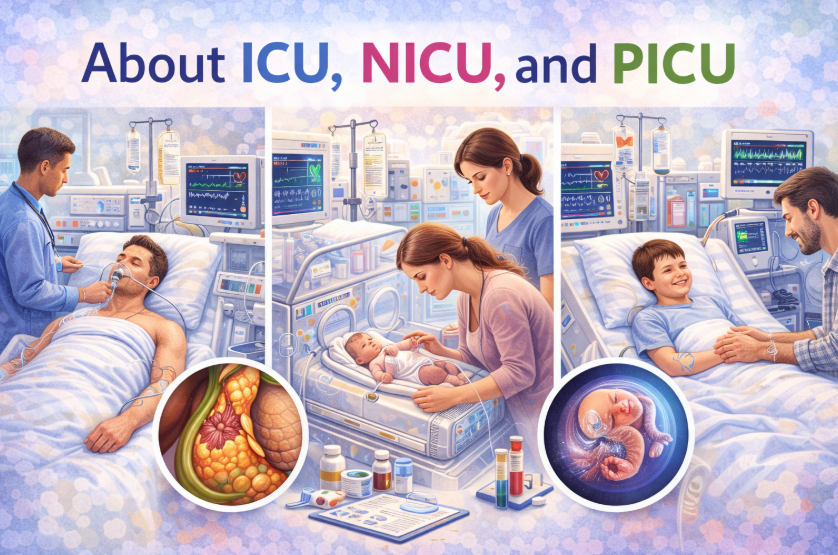
Although often grouped together, ICU, NICU, and PICU serve different patient populations with distinct needs.
Intensive Care Unit (ICU)
An ICU provides care for critically ill adults who require constant monitoring and advanced medical support.
Common reasons for ICU admission include:
- Severe infections (sepsis)
- Major trauma or accidents
- Post-operative complications
- Respiratory failure
- Cardiac emergencies
An ICU in Nepal typically combines advanced technology with round-the-clock medical supervision.
Neonatal Intensive Care Unit (NICU)
A NICU is a specialized unit for newborn babies, particularly those who are:
- Born prematurely
- Of low birth weight
- Experiencing breathing difficulties
- Affected by birth complications or infections
NICU in Nepal plays a crucial role in improving newborn survival, especially as institutional deliveries increase.
Pediatric Intensive Care Unit (PICU)
A PICU provides intensive care for infants and children beyond the neonatal period.
Children may require PICU care due to:
- Severe pneumonia
- Neurological emergencies
- Congenital heart conditions
- Serious infections
- Post-surgical monitoring
PICU in Nepal addresses the unique physiological and emotional needs of children and their families.
Key Differences Between ICU, NICU, and PICU
| Unit | Patient Group | Age Range | Focus of Care |
| ICU | Adults | Typically 18+ years | Life-threatening adult conditions |
| NICU | Newborns | Birth to 28 days | Prematurity and neonatal illness |
| PICU | Children | 1 month to adolescence | Critical pediatric conditions |
Understanding these distinctions helps families navigate care pathways during emergencies.
Why ICU, NICU, and PICU Services Matter in Nepal
Changing Health Landscape
Nepal’s healthcare needs are evolving due to:
- Improved survival from trauma and infections
- Increased institutional childbirth
- Growing recognition of pediatric emergencies
- Expansion of complex surgeries
As a result, demand for ICU in Nepal, NICU in Nepal, and PICU in Nepal has increased significantly.
Impact on Survival and Recovery
Evidence consistently shows that specialized intensive care:
- Reduces mortality
- Improves recovery from severe illness
- Enables early intervention during deterioration
Access to critical care is therefore a public health priority, not a luxury.
Core Components of Modern Intensive Care
Effective ICU, NICU, and PICU services rely on several foundational elements.
1. Continuous Monitoring
Patients are monitored for:
- Heart rate and rhythm
- Oxygen levels
- Blood pressure
- Respiratory status
Continuous data allows rapid response to changes.
2. Advanced Life-Support Equipment
This may include:
- Mechanical ventilators
- Infusion pumps
- Cardiac monitors
- Specialized neonatal and pediatric equipment
Appropriate technology is essential for safe care delivery.
3. Multidisciplinary Care Teams
Critical care is delivered by teams that may include:
- Intensivists
- Pediatricians and neonatologists
- Specialized nurses
- Respiratory therapists
- Laboratory and imaging support
Team-based care improves coordination and outcomes.
4. Infection Prevention and Control
Critically ill patients are vulnerable to infections. Strict protocols are essential to:
- Reduce hospital-acquired infections
- Protect patients with weakened immunity
When Is ICU Care Needed?
ICU admission is considered when a patient:
- Has unstable vital signs
- Requires mechanical ventilation
- Needs intensive monitoring after major surgery
- Is at risk of rapid deterioration
Early ICU admission often prevents complications.
When Do Babies Need NICU Care?
A newborn may require NICU admission due to:
- Premature birth
- Low birth weight
- Breathing problems
- Neonatal infections
- Birth asphyxia
NICU care focuses on supporting development while managing illness.
When Is PICU Care Required?
Children are admitted to PICU when they need:
- Continuous monitoring
- Advanced respiratory or cardiac support
- Care after complex surgery
- Management of severe infections or injuries
PICU environments are designed to balance medical intensity with child-centered care.
Emotional and Family-Centered Aspects of Critical Care
Critical illness affects not only patients but also families.
Key considerations include:
- Clear communication with caregivers
- Emotional support during uncertainty
- Respect for family presence where appropriate
Family-centered care is increasingly recognized as part of quality intensive care.
Critical Care Services in Nepal’s Hospital System
As tertiary hospitals expand, integrated critical care services have become more structured. Hospital in Nepal such as Nepal National Hospital contribute to this landscape by supporting comprehensive ICU, NICU, and PICU services within a coordinated hospital framework.
Such services emphasize:
- Evidence-based protocols
- Skilled clinical teams
- Ethical decision-making
- Continuity of care across departments
Data Snapshot: Critical Care and Outcomes
- Early intensive care intervention significantly reduces mortality in sepsis
- NICU availability improves survival of preterm infants
- Specialized PICU care lowers complications in pediatric emergencies
These findings are supported by international critical care research and regional clinical data.
Common Misconceptions About ICU, NICU, and PICU
- “ICU means no hope” – Not true; many patients recover fully
- “NICU is only for extremely premature babies” – Many full-term babies also benefit
- “PICU is just a smaller ICU” – Pediatric care requires specialized expertise
Correct information helps reduce fear and delays.
Ethical Considerations in Critical Care
Critical care often involves complex decisions, including:
- Balancing benefits and risks
- Respecting patient dignity
- Clear communication about prognosis
Ethical frameworks guide clinicians in delivering compassionate care.
Frequently Asked Questions (FAQ)
What is the difference between ICU and PICU?
ICU treats critically ill adults, while PICU is designed specifically for infants and children.
Are NICU services only for premature babies?
No. Full-term newborns with medical complications may also require NICU care.
Is ICU care available in Nepal?
Yes. Many tertiary hospitals now provide ICU in Nepal with modern monitoring and life-support systems.
How long do patients stay in ICU or PICU?
Length of stay varies depending on illness severity and response to treatment.
Can families visit patients in intensive care?
Policies vary, but many units allow limited, supervised family visits.
Medical / Professional Review Note
This article is informed by established critical care, pediatric, and neonatal medicine literature and reflects current clinical understanding as of 2026.
It is intended for educational and awareness purposes only and does not replace individualized medical consultation.
Key Takeaway
ICU, NICU, and PICU services are essential components of modern healthcare, supporting patients at their most vulnerable moments.
In the context of ICU in Nepal, NICU in Nepal, and PICU in Nepal, expanding awareness helps families understand care pathways, reduces fear, and supports timely decision-making during medical emergencies.
Read More :
