
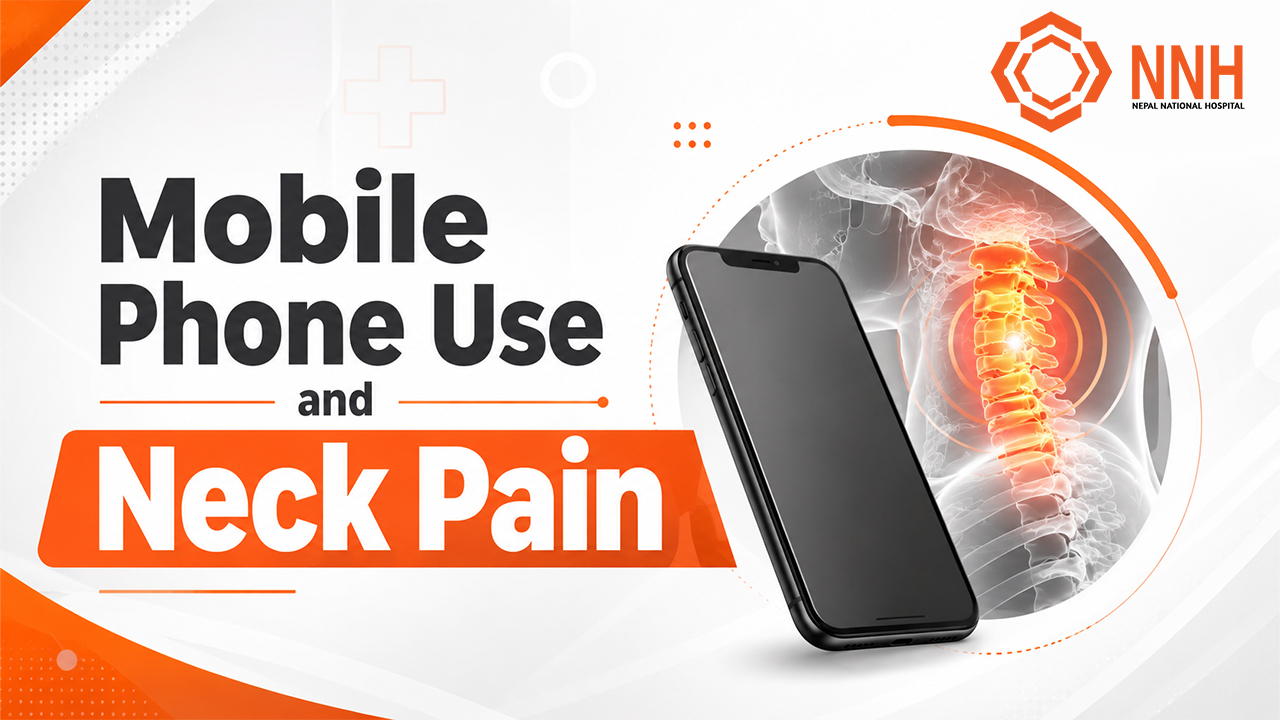
Text neck is a common term used for neck pain, stiffness, and posture-related discomfort caused by spending long periods looking down at a mobile phone, tablet, or laptop. While it is not always a serious condition, repeated neck strain can make daily activities, study, work, sleep, and driving uncomfortable.
The good news is that most phone-related neck pain improves with posture correction, movement breaks, guided exercises, physiotherapy, and timely medical evaluation when symptoms continue.
This guide explains what text neck is, why mobile phone use may contribute to neck pain, how to prevent it, and when to visit an orthopedic doctor for neck pain treatment.
What Is Text Neck?
Text neck refers to neck pain and upper back strain caused by repeatedly bending the head forward while using a phone or digital device.
When the head remains bent forward for a long time, the muscles, ligaments, joints, and discs in the cervical spine work harder than usual. The cervical spine is the neck region of the spine, made up of seven small vertebrae that support the head and protect the spinal cord.
Common Symptoms of Text Neck
| Symptom | What It May Feel Like |
| Neck stiffness | Tightness after scrolling, texting, or studying on a phone |
| Upper back pain | Ache between the shoulders |
| Shoulder discomfort | Heaviness or soreness around the shoulders |
| Headache | Pain starting around the neck or base of the skull |
| Reduced neck movement | Difficulty turning or bending the neck comfortably |
| Arm symptoms | Tingling, numbness, or weakness if a nerve is irritated |
Text neck is not a formal medical diagnosis by itself. Depending on the symptoms and examination, a doctor may diagnose muscle strain, cervical sprain, postural neck pain, cervical spondylosis, disc problems, or nerve irritation.
Why Does Mobile Phone Use Cause Neck Pain?
Mobile phones often make people look down for long periods. This can create forward head posture, rounded shoulders, and reduced movement in the neck and upper back.
Smartphone overuse has been associated with a higher risk of neck pain. Longer phone use may also reduce cervical muscle endurance and increase pain levels, especially among students and office workers.
However, phone use is not the only cause of neck pain. Other contributing factors include poor sleep, stress, weak muscles, long sitting hours, laptop use, previous injury, lack of exercise, and underlying spine conditions.
What Happens Inside the Neck During Text Neck?
The neck is designed to move, not to stay fixed in one position for hours.
When you repeatedly look down, different areas of the neck and upper body may be affected.
| Body Area | Possible Effect |
| Neck muscles | Overwork, tightness, and fatigue |
| Cervical joints | Irritation from prolonged loading |
| Discs | Increased pressure during prolonged flexed posture |
| Shoulders | Rounded posture and muscle imbalance |
| Nerves | Irritation that may cause arm pain, numbness, or tingling |
| Upper back | Stiffness from slouched sitting |
Keeping screens closer to eye level may reduce unnecessary stress on the neck. Still, posture alone is not the full story. Duration of phone use, lack of breaks, stress, muscle strength, and workstation setup also matter.
Is Text Neck Dangerous?
Most early-stage text neck symptoms are not dangerous. Many cases improve with simple changes such as raising the phone, taking breaks, stretching, strengthening, and avoiding long periods in one fixed posture.
However, neck pain should not be ignored if it is severe, repeated, or linked with nerve symptoms such as numbness, tingling, weakness, or pain spreading into the arm.
You should seek medical evaluation if symptoms do not improve or if neck pain affects daily activities.
Common Causes of Text Neck
1. Looking Down for Long Periods
Holding your phone in your lap or near your waist forces your neck to bend forward. Over time, this may strain the muscles at the back of the neck.
2. Long Screen Time Without Breaks
Even a good posture can become uncomfortable if held too long. The body needs regular movement.
3. Weak Neck and Upper Back Muscles
Weak deep neck flexors, shoulder blade muscles, and upper back muscles can make the neck fatigue faster.
4. Poor Study or Work Setup
Students and office workers often switch between phones, laptops, and desktops. Low screen height or unsupported sitting can add extra stress to the neck.
5. Stress and Poor Sleep
Stress can increase muscle tension around the neck and shoulders. Poor sleep may slow recovery and make pain feel worse.
Text Neck Symptoms: When Should You Be Concerned?
Mild discomfort after long phone use is common. However, some symptoms need professional attention.
| Situation | What To Do |
| Mild stiffness after phone use | Take breaks, correct posture, stretch gently |
| Pain lasting more than a few days | Consider orthopedic or physiotherapy evaluation |
| Pain spreading to the shoulder or arm | See a doctor to check for nerve irritation |
| Numbness, tingling, or weakness | Seek medical care promptly |
| Neck pain after a fall or accident | Visit emergency or orthopedic care |
| Fever, unexplained weight loss, or severe night pain | Get urgent medical evaluation |
| Balance problems or hand clumsiness | Seek urgent specialist review |
How Is Text Neck Diagnosed?
A doctor usually begins with your medical history and physical examination.
You may be asked about:
- How long you use your phone daily
- Where the pain is located
- Whether pain spreads to the shoulder or arm
- Whether there is numbness, tingling, or weakness
- What makes the pain better or worse
- Whether there was an injury
- Whether you have headache, dizziness, fever, or night pain
The examination may include posture assessment, neck movement, muscle tenderness, shoulder function, nerve testing, reflexes, and strength testing.
Imaging tests such as X-ray, MRI, or CT scan are not needed for every case. They may be recommended if symptoms are severe, persistent, related to injury, or suggest nerve or spinal cord involvement.
Neck Pain Treatment for Text Neck
Treatment depends on the cause, severity, duration, and whether nerves are involved.
1. Posture Correction
Small changes can reduce repeated neck strain.
Try to:
- Hold your phone closer to eye level
- Keep your shoulders relaxed
- Avoid using the phone in bed with your neck bent
- Use both hands when typing for long periods
- Sit with back support during long reading or study sessions
- Avoid keeping the phone in your lap for long scrolling sessions
The goal is not perfect posture. The goal is regular movement and less time in one strained position.
2. Movement Breaks
Take short breaks every 20–30 minutes. Stand up, roll your shoulders, gently turn your neck, and change position.
A helpful rule is: the next posture is often the best posture.
3. Physiotherapy and Exercise
Physiotherapy can help reduce pain, improve neck mobility, strengthen weak muscles, and correct movement habits.
| Treatment Goal | Examples |
| Reduce pain | Heat, soft tissue techniques, guided mobility |
| Improve flexibility | Neck and chest stretches |
| Build strength | Deep neck flexor and upper back strengthening |
| Improve posture control | Shoulder blade exercises |
| Prevent recurrence | Ergonomic education and home exercise plan |
Avoid forcing painful neck stretches. Exercises should be matched to your symptoms and guided by a qualified clinician if pain is persistent.
4. Medicines
For short-term pain, a doctor may recommend pain-relieving or anti-inflammatory medicines depending on your health history.
Avoid self-medicating for repeated or severe neck pain, as some medicines may not be suitable for people with stomach, kidney, liver, blood pressure, pregnancy-related, or other medical concerns.
5. Lifestyle Changes
Daily activity supports neck recovery. Walking, light stretching, regular sleep, hydration, and balanced nutrition can help improve musculoskeletal health.
6. Injections or Advanced Treatment
Some patients with persistent pain, nerve irritation, or disc-related symptoms may need advanced evaluation. Treatment may include targeted medication, guided procedures, or specialist care.
7. Is Surgery Needed for Text Neck?
Most text neck cases do not need surgery.
Orthopedic surgery may be considered only when there is a clear structural problem such as significant nerve compression, spinal cord compression, severe disc herniation, trauma, instability, or symptoms that do not improve with appropriate non-surgical treatment.
Surgery is never decided based only on posture or phone use. It requires clinical examination, imaging, diagnosis, and discussion with a qualified orthopedic or spine specialist.
Text Neck Prevention: Daily Habits That Help
Prevention is often easier than treatment.
| Habit | Better Option |
| Phone in lap | Raise phone near eye level |
| Long scrolling | Take movement breaks every 20–30 minutes |
| Studying from phone only | Use a larger screen or book stand when possible |
| Slouched sitting | Use back support and keep shoulders relaxed |
| Phone use in bed | Limit time or support arms and neck |
| Ignoring early pain | Act early with posture changes and exercises |
For students and office workers, the biggest improvement often comes from combining three things: less continuous screen time, stronger neck and upper back muscles, and better screen position.
Quick Self-Check: Could Your Neck Pain Be Text Neck?
| Question | Why It Matters |
| Does pain increase after phone use? | Screen posture may be contributing |
| Do you look down for long periods? | This increases neck muscle load |
| Do you get shoulder or upper back tightness? | Common with forward head posture |
| Do symptoms improve with breaks? | May suggest mechanical or postural pain |
| Do you have arm numbness or weakness? | Needs medical evaluation |
This self-check is not a diagnosis. It only helps you understand whether your phone habits may be part of the problem.
Why Choose Nepal National Hospital for Neck Pain Treatment?
If you are looking for an orthopedic hospital in Nepal for neck pain treatment, Nepal National Hospital in Kalanki, Kathmandu provides orthopedic care for musculoskeletal conditions.
The Orthopedics Department includes orthopedic and spine specialists, along with services related to spine care, trauma care, imaging support, rehabilitation, and physiotherapy-focused recovery.
Patients with persistent neck pain may benefit from coordinated evaluation under one roof, especially when symptoms require orthopedic consultation, imaging, physiotherapy, medication, or specialist follow-up.
When Should You Visit an Orthopedic Doctor?
Visit an orthopedic doctor if:
- Neck pain lasts more than a few days despite rest and posture changes
- Pain keeps returning after phone or laptop use
- Pain spreads to the shoulder, arm, or hand
- You feel numbness, tingling, or weakness
- Pain started after a fall, accident, or sports injury
- You have severe headache with neck stiffness
- You have difficulty walking, balance issues, or hand clumsiness
- Pain affects sleep, study, work, or daily activities
Early diagnosis can reduce unnecessary worry and help you start the right treatment plan.
FAQs About Text Neck
What is text neck?
Text neck is neck pain or stiffness linked to repeatedly bending the head forward while using a mobile phone, tablet, or other digital device.
Can text neck go away?
Yes. Many mild cases improve with posture correction, movement breaks, stretching, strengthening, and physiotherapy. Persistent or worsening symptoms should be checked by a doctor.
What is the best treatment for text neck?
The best treatment depends on the cause. Common treatment includes posture changes, reducing continuous phone use, physiotherapy, strengthening exercises, pain management, and orthopedic evaluation when symptoms persist.
Can mobile phones cause permanent neck damage?
Mobile phone use alone does not automatically cause permanent damage. However, long-term poor habits, weak muscles, lack of movement, and untreated spine problems may contribute to ongoing pain.
When should I worry about neck pain?
You should seek medical help if neck pain spreads to the arm, causes numbness or weakness, follows an injury, comes with fever or severe night pain, or affects balance and hand control.
Is text neck common in students?
Yes. Students may develop text neck symptoms because of long hours of phone use, online study, gaming, and laptop work.
Do I need an MRI for text neck?
Not always. Many cases are diagnosed through history and physical examination. MRI may be advised if there are nerve symptoms, severe pain, injury, or symptoms that do not improve.
Can physiotherapy help text neck?
Yes. Physiotherapy may help improve posture, reduce pain, restore movement, and strengthen the neck and upper back muscles.
Is surgery required for text neck?
Usually, no. Surgery is considered only for specific spine conditions such as severe nerve compression, spinal cord compression, trauma, or structural problems that do not respond to non-surgical care.
Where can I get neck pain treatment in Nepal?
You can visit an orthopedic specialist or an orthopedic hospital in Nepal for evaluation. Nepal National Hospital in Kalanki, Kathmandu provides orthopedic services, spine care, rehabilitation support, and emergency access.
Conclusion
Text neck is a modern lifestyle-related neck pain pattern linked to prolonged mobile phone use, forward head posture, and reduced movement. It is common, but it should not be ignored when symptoms are frequent, painful, or associated with arm numbness, weakness, or balance problems.
Most people improve with early changes: raise the phone, take breaks, strengthen the neck and upper back, and seek physiotherapy or orthopedic guidance when pain persists.
For people searching for neck pain treatment or an orthopedic hospital in Nepal, Nepal National Hospital offers orthopedic care in Kathmandu with services related to spine care, trauma, imaging, and rehabilitation support.